Posts

Showing posts with the label self-care

On Bare Attention: Notes on Ascetical Practice in Psychotherapy

I'm trying to teach my students this semester what it is required of clinicians if you are to open yourself to a patient in psychotherapy and listen to them at depth and in a way nobody else does. Such listening has, of course, gone under a number of phrases, starting with Freud's "evenly hovering attention." He posits this as the equally demanding practice expected of the analyst to correspond with the "fundamental rule" of free association. Both are deceptively simple on paper, but fiendishly difficult to practice regularly. 

I've never forgotten the first time that phrase came back to mind as a life-preserver as it were. It was during my internship and I was listening to my first-ever patient to report childhood sexual abuse in the Catholic church. It was a horrifying tale of systematic gang rape in essence lasting many years. As detail after detail poured forth, I found myself fixating on each fresh revelation, trying to sustain an equal level of horror and compassion for every new item. But after about 15 minutes of this, I felt my mind (in what I now regard as a protective-defensive manoeuver to protect me from this demonic horror) starting to disbelieve the patient and think she must be joking. Horrified at this, I realized I had to pull back, as it were, and allow my attention evenly to hover over the entire story rather than immersing myself in the bloody and dark gore of each detail. This allowed me to listen with less inner perturbance and with a greater distance on the scene, which, of course, is what the patient needed for she already knew how horrifying it was, and my constatnly saying so added nothing useful. 

I felt twinges of guilt as I pulled back, as though not being constantly horrified at each detail was somewhow to fail at being compassionate. But I've learned over the years that you cannot be over-identified with your patients. That does not, in the end, help them. They need you to be more objective, to have greater distance, and to offer a perspective that differs from all others in their life. 

How do I know this? They tell me, very explicitly! People will note how their friends will rush to offer them heaps of support and unquestioned sympathy, but they themselves know they need more and other than that, which is why they present for therapy in the first place. 

From this one can derive a technical rule: Don't try to outdo their friends, thinking this is what "empathy" is! As my first supervisor pounded into my head, "The fact you get paid means you will never be friends with your patients!" Thus, I tell my students, you need to listen in ways that go well beyond what friends and family do. Listen for the gaps, the pauses, the inconsistencies, the contradictions; listen for the darker emotions their friends and family did not hear and could not handle. 

From this a second technical rule can be derived: do not collude, especially unconsciously, in hating the people your patient hates. You need to be free to see what might be good in the person (typically parents or spouses) they claim to hate, and how that hate is invariably closely bound up with more tender emotions, including those of love. Your colluding in hate will preemptively destroy any space for ambivalence to emerge and breathe. 

How can you do such things, avoiding such entanglements as over-identifying and hating? At this point I introduce to my students the concept of "bare attention," which is a Buddhist-inflected concept found in the works of Nina Coltart. What does that mean?

Fittingly, Coltart offers only a very minimal definition, saying that to practice bare attention requires that we "teach ourselves so continuously to observe, and watch, and listen, and feel, in silence that this kind of attention becomes--in the end--second nature to us." But what does that look like? She does offer two highly complex paragraphs (quoted here) trying to explain this, which I have my students "meditate" upon as it were. But for the time being I want to advance the thesis that "bare attention" and "evenly hovering attention" are both practices I can only describe using explicitly theological language: they are ascetical practices.

Now "ascetical," for those who remember their Greek, is not in fact theological in origin, but simply pertains to that form of "training" or, as the OED has it, "ἀσκεῖν to exercise." Thus listening with "bare attention" requires the same sort of exercise, training, or practice as you would expect Olympiads to put in to train for a marathon or comparable exercise. 

The sheer physicality of this training should not escape us. It means--as I have learned by trying to ignore some of these things--that you have to take seriously the following as inescapable components of your training:

Food: don't skip meals or hydration in order to see more patients. Your practice of "bare attention" will be severely weakened as you pay more attention to your growling stomach or fantasies of how large a steak you will grill for dinner. (I've learned to keep "good" snacks in my desk--fruit and nuts usually, but also dark chocolate, along with a large pot of tea.)

Exercise: Coltart learned to her great cost that years of sitting without exercise can bring on severe back pain. Do not stint on getting up and walking around between sessions, and working in as much physical movement as you can outside of your clinical schedule. (For me running 15 miles a week is the bare minimum I need to sustain my attention as well as clear my head of the "vicariously traumatic" details of my patients' lives.) 

Timing and Scheduling: Figure out what works for you. If late afternoon or early evening appointments mean you are very tired, but are wide awake for an 8am appointment, then adjust your schedule if you can. There's no attention--bare or otherwise--paid to your patients if you are nodding off! 

Furniture in your consulting room: Again, Coltart was a cautionary tale for me: crappy chairs for you to sit in (including a lack of the fabled ottoman!) will induce discomfort that make your practice of "bare attention" much more difficult. Don't stint here! 

Sleep: You can't pay attention to anything or anyone if you are exhausted all the time. Get good sleep and don't stint on this to work in a few extra appointments.  

Your own Psychotherapy: I think for me likely the single-biggest factor on this list is my own first full psychoanalysis and then ongoing analytic psychotherapy which has allowed me to feel sufficient "ego strength" as it were that I can open myself up to my patient in a self-denying way without feeling threatened or deprived. To put it in "oral" terms, their slaking their needs through me does not leave me starving and resentful. 

These practices require a commitment to training or physical exercise, a form of discipline, a type of "rule of life" known to monastics of antiquity. Observing these things requires a form of self-discipline, indeed of self-denial and self-emptying. 

Such language may make some uncomfortable. Perhaps they will be reassured by learning that no less a figure than Thomas Ogden, in his book Reclaiming Unlived Life, on which I reflected a bit here, calls for such self-denial: 

the analyst must engage in an act of self-renunciation. By self-renunciation I mean the act of allowing oneself to become less definitively oneself in order to create a psychological space in which analyst and patient may enter into a shared state of intuiting and being-at-one-with a disturbing psychic reality that the patient, on his own, is unable to bear.

Ogden does not make the point explicit, but I have to think he would be adamant here that none of this self-renunciation is to be done masochistically.

Here I think Ogden would gladly join hands with Karen Maroda who, echoing Emmanuel Ghent, has rightly called for  "distinguishing between emotional surrender and masochistic submission" (p.39) in the therapeutic dyad. If you are masochistically foregoing food or sleep or other basic needs in order to spend more time with your patients, perhaps you need to ask whether this is really helping you practice the "bare attention" they need and want from you? 

In the end, then, the paradox of self-renunciation is that it helps not just the patient but you as the psychotherapist. After all, which of us does not want to be well-fed, well-rested, decently mobile and fit, and reasonably comfortable in our consulting rooms? Perhaps in the end "self-renunciation" is a disguised synonym for that sometimes infelicitous phrase "self-care"?
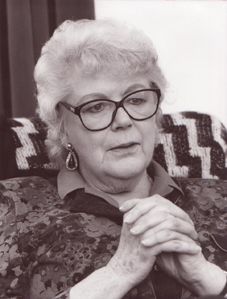
On the 25th Anniversary of Her Death: Nina Coltart on Vocation and Faith in Psychotherapy

For reasons I will not bore you with, my mind has long had an acute awareness of anniversaries and dates of various sorts. So it dawned on me a week or so ago that next month will mark the 25th anniversary of the death of Nina Coltart, perhaps the one psychoanalyst whose influence on me continues to grow even today--if that is a possible and defensible claim of a woman I never met. I wrote here a bit about how her influence began with me thirty years ago (!!) now, and has returned in very helpful ways as I've gotten back into clinical work after a long academic "detour" as it were.

In being aware of the anniversary of her death, and of all that I feel I still owe her, I began to wonder about writing something to commemorate her death in 1997 on June 24th (death of John the Baptist, which somehow seems significant though not in ways I can defend). But where to publish such a piece, and who would be interested, especially an essay written by a nobody and devoted to someone who only became somewhat well-known in the last five years of her life and has now been gone a quarter-century?

But then all of a sudden this week the psychotherapist and philosopher Kristian Kemtrup on Twitter, who authors some of the most insightful questions and richly reflective discussions on a medium often famed for doing anything but, asked the following:
I’m curious what people think: What are the causes of some therapists finding the job to be unbearable? What causes them to burnout and quit.
How do some therapists avoid this? How do we advise others to help them avoid it?

My instincts in answering that question, as I said on Twitter, went immediately to Coltart, and so I thought I'd post some longer reflections in answer to these questions and by way of reflecting with real gratitude for her life and work. 

If I return to her very often, it is because, I now realize, of three things at least: first, she led me (via her first book Slouching Towards Bethlehem) to take the plunge into a four-times-a-week psychoanalysis on the couch for nearly seven years with the late Dr Louise Carignan. That would change my life in countless ways from which I continue to benefit (as Adam Phillips says, "the cure can begin only after the treatment has ended"). 

Second, Coltart, in the last interview she gave about six months before her death, noted that she was the most independent minded member of the Independent Group within the British Psychoanalytical Society, and she encouraged others to be very true to themselves and very independently minded as well. I have never been a joiner, and long resisted being put into, and putting others into, boxes and categories, so this (somewhat schizoid?) spirit of hers appeals very strongly to mine. 

Third, Coltart has a very practical focus that I find eminently useful on a near-daily basis, and so let me elaborate here four concrete ways I've found, and find, her coming to mind at opportune moments in clinical work with a view to answering Kristian's questions above: survival-with-enjoyment; faith; a strong life outside the consulting room; and vocation. Let me reflect briefly on each. (I will elaborate in much more detail on all four in a book I'm working on.)

Survival-With-Enjoyment:

This is a theme she writes about crisply in her second book, How to Survive as a Psychotherapist. Here she stoutly insists that the notion of 'survival' often seems to mean, at least in a British context, a kind of grim, mirthless carrying on, as in Surviving the Blitz. Instead, she wants to insist--without in the least being pollyannish about it--that the survival of a psychotherapist has to be shot through with enjoyment. She doesn't cite Winnicott here as I expected, but this, of course, is very similar to his claim that one must be able, as both psychotherapist and patient, to play and enjoy each other; I wrote a bit about that here

I wonder if those who find the therapeutic job unbearable or who appear to burn out (I've seen three therapists, all much younger than I, leave the field in the last month alone after less than a decade) from it ever thought that they could, and should, enjoy it. Or was that an impermissible thought? Were there (as Coltart would phrase it) some super-ego elements of guilt or masochism contaminating their ability to enjoy the work? This is entirely speculative and I offer no judgment here at all, not having any intimate knowledge of the people who leave the field. 

But as a full-time academic in psychology who is aware of the (deplorable and often unbelievably vacuous) state of training in undergraduate and graduate programs, I think I am on surer ground in saying that the idea of survival with enjoyment is almost certainly rarely if ever even thought, let along vigorously discussed openly and appreciatively. Students are admitted by universities interested only in keeping students in seats with vague promises of an 'interesting career' in the 'helping professions.' Little is said beyond that, I wager. Certainly notions of 'enjoyment' would be beyond the pale of many who might regard such discussions as impermissible or purely private concerns. 

Faith:

To hope that you not just survive, but also enjoy the work, takes me to the second notion that Coltart unapologetically proffers: faith. This, of course, is an even more 'impermissible' thought in virtually all clinical training programs except, perhaps, those in Christian academic contexts (where the uses and abuses of 'faith' are legion). 

Coltart notes in several places that she was an Anglican (as I was also when I first read her, which perhaps adds an additional reason to the affinity I felt with her) for part of her life before coming out of that to embrace Buddhism. But in any event she would defend the notion of faith, in a non-theological sense, for the rest of her life. For her that is defined as "faith in ourselves and in this strange process which we daily create with our patients." Such faith constitutes, with love, the only "trustworthy container" for the "hatred, rage, and contempt for varying periods of time" that patients might bring (or we in turn might feel). This idea of faith is one where she explicitly cites the influence of Bion, especially his book Attention and Interpretation.

There will be dark and difficult days, setbacks and anger and aggression and hatred in the transference and counter-transference. There will be patients you cannot reach, patients whose progress seems minimal at best. All the while the demands for treatment are relentless across this country and almost everywhere else, and they are only going up. In such a context, all this can be greatly discouraging to those who do not have deep training, their own personal psychotherapy, good supervision, and faith that you can and will make a difference and people can and will get better. Absent these four factors (at least), I can see how people might easily burn out and leave. 

An Extra-Therapeutic Life:

Faith without works--to cite a tedious Reformation debate--is not entirely useless, but it doesn't get you very far in psychotherapy. You need some concrete work and works outside of your consulting room to go along with faith so that both might help you to survive and enjoy the work.

In her last interview, published in the charming collection Freely Associated: Encounters in Psychoanalysis with Christopher Bollas, Joyce McDougall, Michael Eigen, Adam Phillips and Nina Coltart that Anthony Molino put together, Coltart spends some time justifying her decision to not just retire in 1994 but to resign her membership in the British Psychoanalytical Society, which astonished a lot of people and caused some of them to wonder if she wasn't becoming depressed or demented or something. She says quite simply that her life as a psychoanalyst was over, and she had no need of the Society any more, and thus no need for any badges of identity such as membership conveyed. 

Vigorously in retirement, but also in her life decades before that, Coltart enjoyed travel, extensive reading (of anything and everything outside psychoanalysis, she says, which seems key!), gardening, keeping up with friends, and other things. She had a very clear sense of her own life and pursued it with zest outside her consulting room, and bluntly encouraged other therapists to do the same thing as when, e.g., she writes: 

take it seriously when I say that you need to attend with real care to rest, relaxation, and refreshment, wherever you personally find it. Don't let your devotion to the job become too contaminated by superego elements and certainly don't let guilt percolate into any of your forms of relaxation and rest.

If you do these things, she concludes this passage in The Baby and the Bathwater, you will help preserve your ability to see and feel that "we have the most interesting job in the world." 

Certainly for me--whatever that's worth--I have longstanding academic and other interests outside of psychotherapy, and these are not only valuable in themselves, but they are crucial adjuncts in sustaining my faith, my ability to enjoy the work, and my sense of vocation. They 'inoculate' me against some of the vicarious traumatization characteristic of our work, and allow me to return to it refreshed each week. 

Doing clinical work no more than 20 hours a week at most also helps enormously to keep time open for other interests as well as teaching. People who do not have this luxury--as I honestly recognize it to be--who must work 40 or more hours just to try to survive (since the pay in most places, outside perhaps of private practice, is so abysmal) could easily find it harder to stay in this vocation long-term and could burn out sooner.

Vocation: Apart from the above passage, Coltart seldom uses the word 'job,' however. Instead she makes a case in this last book of hers for seeing psychotherapy as a vocation, another traditionally theological term that she removes from that context for her own use, saying that vocation has five features:

  • giftedness
  • belief in the power of the unconscious
  • strength of purpose
  • reparativeness
  • curiosity

I am not at all sure that many training programs today talk about any of these above, let alone see them as worthy goals. My experience in higher education in Canada, Ukraine, and the US has all been within Catholic institutions, so the idea of 'vocation' comes more naturally and easily on such campuses--but beyond them? I'm not so sure.

Nevertheless, for me the idea of vocation--to both teaching and psychotherapy alike--has been absolutely sustaining through brutal cut-backs, devastating loss of morale in the last few years, very poor pay, endless bureaucratic encroachments, pestilential administrators and insurance companies, and other issues. I have looked many times at other 'careers' with much greater pay (Walmart is now paying its truck drivers a starting salary of $110,000 per annum!), but because I enjoy both of my vocations greatly and have faith in the process of teaching and therapy alike, I remain. But if I did not have this sense of vocation, I would have bailed a long time ago and I do not in any way for even a moment blame those who do bail out. 

All these put together--a sense of faith in oneself and the process, a sense of vocation, a sense of enjoyment, and an unapologetic life outside the consulting room--function, for me if for nobody else, as very strong supports to keep doing this difficult and unpredictable work with delight and curiosity and love. (Questions for another time: can these things be made requirements of admission into training programs? Can training programs themselves be restructured to focus on or even inculcate these where lacking?)

Outing Myself as Schizoid:

But there is--again for me if not for others--one other factor here I cannot fail to mention. Let me conclude here with an additional response to Kristian's questions drawn not from Coltart but from someone else I've learned a great deal from and read with real profit and gratitude: Nancy McWilliams (on whom I last wrote at length here). (I like to think she and Coltart would probably have found each other quite compatible in many ways.) McWilliams' paper on schizoid dynamics is, quite simply, the best thing I've read in the literature going all the way back to Fairbairn. It shows what is best and useful and creative about these personality traits and dynamics, and does so in a way that explicitly rejects the pathologizing approach of the DSM. 

In answer to how some therapists avoid being burnt out or driven from the profession, I would, in all honesty, have to say for myself alone that having fairly pronounced schizoid tendencies in the way that McWilliams so brilliantly captures has, in addition to all the foregoing (faith, vocation, etc.), been an unintended gift. When she writes that "psychoanalysis is a profession by schizoids for schizoids," I stood and cheered. And when she further notes that some research out of Australia on the personality dynamics of therapists has revealed that "although the modal personality type among female therapists is depressive, among male therapists, schizoid trends predominate," I again felt gratified and, perhaps ironically, less alone. 

She continues that schizoid types are ideally suited for practicing psychotherapy because they "are not surprised or put off by evidence of the unconscious.  That is, they have intimate--and at times uneasy--familiarity with processes that in most people are out of awareness, an access that makes psychoanalytic ideas more accessible and commonsensical to them than."

Using perhaps more familiar and less freighted terminology, McWilliams continues:

Schizoid people are temperamentally introspective; they like to wander among the nooks and crannies of their mind, and they find in psychoanalysis many evocative metaphors for what they find there.  In addition, the professional practice of analysis and the psychoanalytic therapies offers an attractive resolution of the central conflict about closeness and distance that pervades schizoid psychology.

I could quote acres of her paper but will not. Go and read it--it's very rich and repays regular re-readings--and her equally excellent books

I hope her thoughts, and those of Coltart, along with my own, might be of some use in continuing to reflect upon those excellent questions Dr Kemtrup posed this week. Certainly these thoughts of mine do not pretend to any great wisdom, nor to being any sort of panacea, but perhaps they might at the very least function as a worthy commemoration of and tribute to a psychotherapist and psychoanalyst from whom I have received much. May Nina Coltart's memory continue to be a blessing.

How to Survive as a Therapist or Singing the Praises of Nina Coltart (II)

I have previously, and at some length, noted what I have learned from the delightful Nina Coltart.

Continuing on from there, let us turn now to her third and final book, The Baby and the Bathwater, published in 1996, a year before Coltart's death.

The book opens with a preface from the Anglo-American psychoanalyst Christopher Bollas, whose many books I commend to your attention and hope to reflect on later. Bollas notes that Coltart has here offered us "luminous autumnal visions of her life." If, he says, this is indeed her last book (as Coltart said it would be), then Bollas thinks she has saved the best for last.

Her first chapter opens with a case-study of a patient, a Welsh man, who was one of her first patients in the 1960s, from whom, she says, she may have learned more than anyone else. One important lesson was to find in certain sadomasochistic practices of this patient a "reparative wish" to overcome early childhood trauma, a phenomenon which has been much remarked on by other clinicians, including Robert Stoller and Adam Phillips.

In her second chapter, "Why Am I Here?" she returns to a theme we have seen in the past: that of the therapist's vocation, which, in the next chapter, she speaks of as a vocation to "this rather cloistered life," an image I find tremendously appealing.

She notes that a vocation has five features:
  • giftedness
  • belief in the power of the unconscious
  • strength of purpose
  • reparativeness
  • curiosity
Of these, she suggests the reparative drive is the one that most distinguishes a therapeutic calling while also leading into the countertransference. 

To the above list she later in the chapter adds "the capacity to love" one's patients, which need not consist always in positive feelings. Indeed, she recognizes one can love without always liking. In this, she puts me in mind of a more "medieval" or scholastic definition of love that consists in willing (perhaps today we might say "desiring") the good of the other.

She also notes in this chapter--without using the phrase, which does not seem to have caught on until after Coltart wrote--the importance of what today is very frequently described as "self-care." Coltart here speaks with characteristic bluntness: "take it seriously when I say that you need to attend with real care to rest, relaxation, and refreshment, wherever you personally find it. Don't let your devotion to the job become too contaminated by superego elements and certainly don't let guilt percolate into any of your forms of relaxation and rest" (39). Later on, in her penultimate chapter, "Endings," she adds to this by quoting an unnamed colleague: "Try not to worry about your patients and certainly don't ever take worry home with you overnight. Be concerned for your patients always--you will find that with true concern you can leave them behind when you aren't with them" (142-43). 

She ends this chapter by noting that "We have the most interesting job in the world."  

Skipping to her fourth chapter, "Handling the Transference," Coltart stresses once more the importance of being "humble and self-effacing" and perhaps this is nowhere more important than in not "pushing the river" as my supervisor, Dr Carl Jylland-Halverson, memorably phrases it. For Coltart, she says pushing a patient to a recognition before they are ready, before they themselves have almost grasped and voiced it directly, will almost always backfire. Here she quotes the old line "A man convinced against his will/Retains his old conviction still."

Coltart remained convinced, here and elsewhere, of the importance of returning again and again to Freud's early technical papers (esp. those between 1910 and 1915), and here notes how much Freud anticipated, correctly, the great emphasis placed today on establishing a good "therapeutic alliance." She also notes how he changed his mind (which far too few people seem to realize or credit him with) on a number of things, and was not nearly the dogmatician in everything he is sometimes portrayed as.

In her final chapter, which gives its name to the title of the book, she throws out a few provocative final ideas without much developing them. And she reflects on the importance of periodic throwing out of the "bathwater" of certain ideas--or, conversely, the retention of them, as the case may be. The point is to scrutinize what we have learned to see if it is still effective and valuable, and if not then to get rid of it rather than engage in what I might call a form of ideological hording or theoretical anal-retentiveness.

She confesses she's puzzled by people who remember their analysis in great detail, noting with evident relief that "many, however, do not, which is consoling."

One idea she goes after with especial bluntness, recognizing it may be controversial: that of analytic therapy as not providing a "corrective emotional experience." She notes its provenance in the 1940s in people like Alexander and French (and, I would add, later figures such as Sullivan and Yalom), but says that too many analysts poured cold water on the idea. Coltart's having none of it, insisting that of course analysis and analytic therapy does provide a corrective emotional experience, and there's no need to hide behind analytic neutrality or abstinence in denying this. In fact, ending this book by returning to her previous book, as I noted, Coltart says that therapy should not just supply a "corrective emotional experience" but it should also quite unapologetically give both therapist and patient an experience of enjoyment. 

With that, we come to the end of Coltart's third and final book, and the end of her life. In a future post, we hope to look at the lovely Festschrift that was published posthumously: Her Hour Come Round at Last: A Garland for Nina Coltart.