Posts

Showing posts with the label Louise Carignan

On Love, Eros, and the Perverse

Introduction:

Recently with my students, I began a discussion about transference and counter-transference in psychotherapy, including erotic transferences and counter-transferences. The class seemed to cleave into two: those who regarded the idea of any sort of erotic feelings arising, in either direction, as "gross"; and those who didn't see what the big deal was. I'm not sure by whose response I am more disconcerted. 

Part of the difficulty turns on the wide variety of meanings attached to the term "erotic." I tried, following the ancients, to expand upon it as something much wider and more vital than the merely sexual or, narrower still, the genital. I brought in Freud's notion of the libidinal and its close links in to the notion of both "life" and "love." This gained traction with the students and also frank relief among them. At last they seemed to find a notion they could relate to: the erotic as something that excites deep and wide interest, even "passion," as people often say today, without necessarily implicating them in some sordid desire for sexual intercourse with whatever/whomever this objet is. 

In talking with them, I was of course drawing on what I've written previously about what I have learned, and am still learning, from Andrea Celenza, especially in her vitally important book Erotic Revelations: Clinical Applications and Perverse Scenarios (Routledge, 2014). I drew on her work with my students in attempting to illustrate the polymorphous ways in which erotic desire can arise in treatment. As Celenza shows, such desire, far from being avoided as it almost universally seems to be today, can in fact be helpful--but it can also lead to disastrous outcomes if not handled well. 

On the strength of how much I had learned from that book, I recently bought another of hers: Transference, Love, Being: Essential Essays from the Field (Routledge, 2022). There are riches scattered throughout this collection, one of whose chief virtues is that almost every chapter is 3 or at most 4 pages in length. 

The collection begins by reflecting on the disappearance of the notion of love in psychotherapeutic practice. And that reflection itself begins by referring to Philip Bromberg's work, who really deserves (and will one day achieve) an essay of his own on here. When someone introduced me, last fall, to his essay "Standing in the Spaces," it effected a sea-change in how I conceive of my own mind and the notion of selfhood and psychic change. It also changed for the good how therapy was progressing with one particular long-term case that seemed to be bogged down. 

Since then, I have used excerpts from his essay in a number of classes, and in every case it has stirred up lengthy and fascinating discussion. 

Celenza says that the splits in the self, which Bromberg focuses on, can be helped by reconsidering and reintroducing the notion and practice of love, properly understood, in the therapeutic relationship. 

Disappearing Love and Hidden Sexuality:

Along with the disappearance of any notion of love in contemporary practice, Celenza, in this book and her other one, has pressed the case more relentlessly and compellingly than anyone else I have read about the disappearance of sexuality and the erotic, citing a word-count Fonagy did some years back showing that terms like 'relational' are all over the literature today, but 'sexual' and cognate terms have taken a nose-dive. This leads Celenza to claim that "there is an unmistakable desexualization that pervades psychoanalytic theorizing...., an erasure of the natural erotic and sensual aspects of intersubjectivity" (p.75).

Celenza, later in this chapter, speculates that perhaps this disappearance has someting to do with the fact that, understood classically, "Eros is described as the son of Chaos, the original primeval emptiness of the universe" (p.76). She does not elaborate the point but the suggestion seems to be that therapy is often difficult enough without (one imagines some bedraggled, overworked, underpaid clinician moaning) introducing further potentially destabilizing and presumably difficult elements such as the erotic.

But at what cost do we exclude such things? In later chapters, she returns indirectly to the theme saying that "we must have the full range of affectivity at our disposal" in order for us to "help our patients...experience the excitements and mysteries within themselves" (113). These excitements, she notes a page later, "include allowing sexual desire to be present in our countertransference." The point of doing so, she repeatedly notes throughout the book, is to serve the patient: "the more we can acknowledge what we feel at work with our patients, the better we do." (Her earlier book, Erotic Revelations, has helped me greatly in seeing that such feelings can be stirred up within us in ways that unconsciously and blithely ignore our cultured notions of "gender" and "sexual orientation.") 

The Perverse and Sadomasochistic:

The essays in the final section are the ones I gravitated towards the most for I have for some time been engaged in trying to understand manifestations of what she calls "the perverse," including sadomasochistic fantasies and actions of some patients.

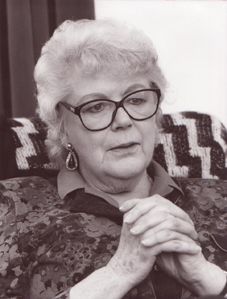
Some interesting work has been attempted here over the years, but there seems to have been gaps in the literature. Robert Stoller's book Perversion: the Erotic Form of Hatred, from the mid 1970s, seems to have been one of the first major works in the area. The topic comes and goes across the decades. There was renewed interest in the late 90s on the "perverse," and I have to say that it was a great surprise to see my first analyst's work in this area cited in Celenza's chapters and notes. (See also this essay by Dr. Louise Carignan, whose winsome necrology is here.) 

Celenza brings much (not all) of this literature together in chapters 30 and 31, which I found the richest in the book. She begins, rightly, by trying to define terms, offering "a contemporary definition of perversion that reveals a form of psychic functioning as a quality of being toward others, toward one's body, or toward internal objects" (p.139). This differs, she says, from past definitions which were almost always entirely behavioral in nature. She continues: "I propose that a perverse internal psychic mode is one where affective embodied and pre-reflective self-experience is split off or dissociated." 

Chapter 31 is perhaps the longest and most helpfully detailed in the book, and continues on these themes. She explicitly reviews the past literature to see what she finds still useful, discarding the rest. She says that any new attempt at defining the perverse must abandon "phallocentric and heteronormative assumptions." 

What does perversion look like in action? She begins by arguing that "persons engaging in perverse scenarios are attempting to imagine a one-person universe" (142). The tracks closely with cases I have seen clinically.

From here she lays out seven "characteristics that define a perverse quality of being." These are:

  • Constriction and Constraint
  • Repetition
  • Objectification
  • Sexualization
  • Desire to Harm
  • Means/End Reversal
  • Absence of Symbolization. 

Taken together, these are usually brought to bear in constructing scenarios and fantasies to manage anxiety, ward off danger, and maintain control. As Stoller put it, sadomasochistic fantasies are usually ones of triumph that at some level are thereby trying to reverse the traumas of the past. They have a dead and deadening, self-reinforcing nature to them; their objects are sexualized to turn threats into pleasure; and there is very little ability to play with them in a symbolic register. She very helpfully elaborates on all these points in some detail, and with clinical material--as she does in nearly every chapter. 

Overall, then, Transference, Love, Being is a rewarding collection and I continue to be grateful for having been led to Celenza's work.
On the 25th Anniversary of Her Death: Nina Coltart on Vocation and Faith in Psychotherapy

For reasons I will not bore you with, my mind has long had an acute awareness of anniversaries and dates of various sorts. So it dawned on me a week or so ago that next month will mark the 25th anniversary of the death of Nina Coltart, perhaps the one psychoanalyst whose influence on me continues to grow even today--if that is a possible and defensible claim of a woman I never met. I wrote here a bit about how her influence began with me thirty years ago (!!) now, and has returned in very helpful ways as I've gotten back into clinical work after a long academic "detour" as it were.

In being aware of the anniversary of her death, and of all that I feel I still owe her, I began to wonder about writing something to commemorate her death in 1997 on June 24th (death of John the Baptist, which somehow seems significant though not in ways I can defend). But where to publish such a piece, and who would be interested, especially an essay written by a nobody and devoted to someone who only became somewhat well-known in the last five years of her life and has now been gone a quarter-century?

But then all of a sudden this week the psychotherapist and philosopher Kristian Kemtrup on Twitter, who authors some of the most insightful questions and richly reflective discussions on a medium often famed for doing anything but, asked the following:
I’m curious what people think: What are the causes of some therapists finding the job to be unbearable? What causes them to burnout and quit.
How do some therapists avoid this? How do we advise others to help them avoid it?

My instincts in answering that question, as I said on Twitter, went immediately to Coltart, and so I thought I'd post some longer reflections in answer to these questions and by way of reflecting with real gratitude for her life and work. 

If I return to her very often, it is because, I now realize, of three things at least: first, she led me (via her first book Slouching Towards Bethlehem) to take the plunge into a four-times-a-week psychoanalysis on the couch for nearly seven years with the late Dr Louise Carignan. That would change my life in countless ways from which I continue to benefit (as Adam Phillips says, "the cure can begin only after the treatment has ended"). 

Second, Coltart, in the last interview she gave about six months before her death, noted that she was the most independent minded member of the Independent Group within the British Psychoanalytical Society, and she encouraged others to be very true to themselves and very independently minded as well. I have never been a joiner, and long resisted being put into, and putting others into, boxes and categories, so this (somewhat schizoid?) spirit of hers appeals very strongly to mine. 

Third, Coltart has a very practical focus that I find eminently useful on a near-daily basis, and so let me elaborate here four concrete ways I've found, and find, her coming to mind at opportune moments in clinical work with a view to answering Kristian's questions above: survival-with-enjoyment; faith; a strong life outside the consulting room; and vocation. Let me reflect briefly on each. (I will elaborate in much more detail on all four in a book I'm working on.)

Survival-With-Enjoyment:

This is a theme she writes about crisply in her second book, How to Survive as a Psychotherapist. Here she stoutly insists that the notion of 'survival' often seems to mean, at least in a British context, a kind of grim, mirthless carrying on, as in Surviving the Blitz. Instead, she wants to insist--without in the least being pollyannish about it--that the survival of a psychotherapist has to be shot through with enjoyment. She doesn't cite Winnicott here as I expected, but this, of course, is very similar to his claim that one must be able, as both psychotherapist and patient, to play and enjoy each other; I wrote a bit about that here

I wonder if those who find the therapeutic job unbearable or who appear to burn out (I've seen three therapists, all much younger than I, leave the field in the last month alone after less than a decade) from it ever thought that they could, and should, enjoy it. Or was that an impermissible thought? Were there (as Coltart would phrase it) some super-ego elements of guilt or masochism contaminating their ability to enjoy the work? This is entirely speculative and I offer no judgment here at all, not having any intimate knowledge of the people who leave the field. 

But as a full-time academic in psychology who is aware of the (deplorable and often unbelievably vacuous) state of training in undergraduate and graduate programs, I think I am on surer ground in saying that the idea of survival with enjoyment is almost certainly rarely if ever even thought, let along vigorously discussed openly and appreciatively. Students are admitted by universities interested only in keeping students in seats with vague promises of an 'interesting career' in the 'helping professions.' Little is said beyond that, I wager. Certainly notions of 'enjoyment' would be beyond the pale of many who might regard such discussions as impermissible or purely private concerns. 

Faith:

To hope that you not just survive, but also enjoy the work, takes me to the second notion that Coltart unapologetically proffers: faith. This, of course, is an even more 'impermissible' thought in virtually all clinical training programs except, perhaps, those in Christian academic contexts (where the uses and abuses of 'faith' are legion). 

Coltart notes in several places that she was an Anglican (as I was also when I first read her, which perhaps adds an additional reason to the affinity I felt with her) for part of her life before coming out of that to embrace Buddhism. But in any event she would defend the notion of faith, in a non-theological sense, for the rest of her life. For her that is defined as "faith in ourselves and in this strange process which we daily create with our patients." Such faith constitutes, with love, the only "trustworthy container" for the "hatred, rage, and contempt for varying periods of time" that patients might bring (or we in turn might feel). This idea of faith is one where she explicitly cites the influence of Bion, especially his book Attention and Interpretation.

There will be dark and difficult days, setbacks and anger and aggression and hatred in the transference and counter-transference. There will be patients you cannot reach, patients whose progress seems minimal at best. All the while the demands for treatment are relentless across this country and almost everywhere else, and they are only going up. In such a context, all this can be greatly discouraging to those who do not have deep training, their own personal psychotherapy, good supervision, and faith that you can and will make a difference and people can and will get better. Absent these four factors (at least), I can see how people might easily burn out and leave. 

An Extra-Therapeutic Life:

Faith without works--to cite a tedious Reformation debate--is not entirely useless, but it doesn't get you very far in psychotherapy. You need some concrete work and works outside of your consulting room to go along with faith so that both might help you to survive and enjoy the work.

In her last interview, published in the charming collection Freely Associated: Encounters in Psychoanalysis with Christopher Bollas, Joyce McDougall, Michael Eigen, Adam Phillips and Nina Coltart that Anthony Molino put together, Coltart spends some time justifying her decision to not just retire in 1994 but to resign her membership in the British Psychoanalytical Society, which astonished a lot of people and caused some of them to wonder if she wasn't becoming depressed or demented or something. She says quite simply that her life as a psychoanalyst was over, and she had no need of the Society any more, and thus no need for any badges of identity such as membership conveyed. 

Vigorously in retirement, but also in her life decades before that, Coltart enjoyed travel, extensive reading (of anything and everything outside psychoanalysis, she says, which seems key!), gardening, keeping up with friends, and other things. She had a very clear sense of her own life and pursued it with zest outside her consulting room, and bluntly encouraged other therapists to do the same thing as when, e.g., she writes: 

take it seriously when I say that you need to attend with real care to rest, relaxation, and refreshment, wherever you personally find it. Don't let your devotion to the job become too contaminated by superego elements and certainly don't let guilt percolate into any of your forms of relaxation and rest.

If you do these things, she concludes this passage in The Baby and the Bathwater, you will help preserve your ability to see and feel that "we have the most interesting job in the world." 

Certainly for me--whatever that's worth--I have longstanding academic and other interests outside of psychotherapy, and these are not only valuable in themselves, but they are crucial adjuncts in sustaining my faith, my ability to enjoy the work, and my sense of vocation. They 'inoculate' me against some of the vicarious traumatization characteristic of our work, and allow me to return to it refreshed each week. 

Doing clinical work no more than 20 hours a week at most also helps enormously to keep time open for other interests as well as teaching. People who do not have this luxury--as I honestly recognize it to be--who must work 40 or more hours just to try to survive (since the pay in most places, outside perhaps of private practice, is so abysmal) could easily find it harder to stay in this vocation long-term and could burn out sooner.

Vocation: Apart from the above passage, Coltart seldom uses the word 'job,' however. Instead she makes a case in this last book of hers for seeing psychotherapy as a vocation, another traditionally theological term that she removes from that context for her own use, saying that vocation has five features:

  • giftedness
  • belief in the power of the unconscious
  • strength of purpose
  • reparativeness
  • curiosity

I am not at all sure that many training programs today talk about any of these above, let alone see them as worthy goals. My experience in higher education in Canada, Ukraine, and the US has all been within Catholic institutions, so the idea of 'vocation' comes more naturally and easily on such campuses--but beyond them? I'm not so sure.

Nevertheless, for me the idea of vocation--to both teaching and psychotherapy alike--has been absolutely sustaining through brutal cut-backs, devastating loss of morale in the last few years, very poor pay, endless bureaucratic encroachments, pestilential administrators and insurance companies, and other issues. I have looked many times at other 'careers' with much greater pay (Walmart is now paying its truck drivers a starting salary of $110,000 per annum!), but because I enjoy both of my vocations greatly and have faith in the process of teaching and therapy alike, I remain. But if I did not have this sense of vocation, I would have bailed a long time ago and I do not in any way for even a moment blame those who do bail out. 

All these put together--a sense of faith in oneself and the process, a sense of vocation, a sense of enjoyment, and an unapologetic life outside the consulting room--function, for me if for nobody else, as very strong supports to keep doing this difficult and unpredictable work with delight and curiosity and love. (Questions for another time: can these things be made requirements of admission into training programs? Can training programs themselves be restructured to focus on or even inculcate these where lacking?)

Outing Myself as Schizoid:

But there is--again for me if not for others--one other factor here I cannot fail to mention. Let me conclude here with an additional response to Kristian's questions drawn not from Coltart but from someone else I've learned a great deal from and read with real profit and gratitude: Nancy McWilliams (on whom I last wrote at length here). (I like to think she and Coltart would probably have found each other quite compatible in many ways.) McWilliams' paper on schizoid dynamics is, quite simply, the best thing I've read in the literature going all the way back to Fairbairn. It shows what is best and useful and creative about these personality traits and dynamics, and does so in a way that explicitly rejects the pathologizing approach of the DSM. 

In answer to how some therapists avoid being burnt out or driven from the profession, I would, in all honesty, have to say for myself alone that having fairly pronounced schizoid tendencies in the way that McWilliams so brilliantly captures has, in addition to all the foregoing (faith, vocation, etc.), been an unintended gift. When she writes that "psychoanalysis is a profession by schizoids for schizoids," I stood and cheered. And when she further notes that some research out of Australia on the personality dynamics of therapists has revealed that "although the modal personality type among female therapists is depressive, among male therapists, schizoid trends predominate," I again felt gratified and, perhaps ironically, less alone. 

She continues that schizoid types are ideally suited for practicing psychotherapy because they "are not surprised or put off by evidence of the unconscious.  That is, they have intimate--and at times uneasy--familiarity with processes that in most people are out of awareness, an access that makes psychoanalytic ideas more accessible and commonsensical to them than."

Using perhaps more familiar and less freighted terminology, McWilliams continues:

Schizoid people are temperamentally introspective; they like to wander among the nooks and crannies of their mind, and they find in psychoanalysis many evocative metaphors for what they find there.  In addition, the professional practice of analysis and the psychoanalytic therapies offers an attractive resolution of the central conflict about closeness and distance that pervades schizoid psychology.

I could quote acres of her paper but will not. Go and read it--it's very rich and repays regular re-readings--and her equally excellent books

I hope her thoughts, and those of Coltart, along with my own, might be of some use in continuing to reflect upon those excellent questions Dr Kemtrup posed this week. Certainly these thoughts of mine do not pretend to any great wisdom, nor to being any sort of panacea, but perhaps they might at the very least function as a worthy commemoration of and tribute to a psychotherapist and psychoanalyst from whom I have received much. May Nina Coltart's memory continue to be a blessing.

How May We Say that Psychoanalytic Therapy Changes Us?

I freely admit that I've struggled for twenty years to read Lacan with any profit--nearly the same period as I've sought to discern the effects of my own psychoanalysis, which ran for seven years four times a week on the couch. So I am glad, finally, to have been exposed to enough of his writings to find some insightful and useful ideas therein for understanding my own experience as an analysand. 

At the same time, though, I am aware of violating my own practice of always seeking to read primary literature rather than secondary sources, which I have done in this case in the form of Luis Izcovich's recent book The Marks of a Psychoanalysis, trans. E. Faye and S. Schwartz (Karnac, 2017). Izcovich is a psychiatrist, psychoanalyst, and academic teaching and practicing in Paris, where he is a founding member of the School of Psychoanalysis of the Forums of the Lacanian Field. He has written several other books, most of which have not been translated into English. He quotes Lacan lavishly, especially in the latter half of the book, which was far and away the more valuable part to me. 

Part of the accessibility of this book, for me, was that it does not confine itself only to Lacanian thought. Chapter 10 takes me into deeply familiar territory: England, where Izcovich reviews the work of Winnicott and Guntrip. The latter was especially interested in the question at the heart of this book: how much change can anyone expect to experience after having been analyzed? 

Guntrip was first analyzed by the unjustly neglected Scottish analyst W.R.D. Fairbairn (about whom John Sutherland wrote an interesting if incomplete book, Fairbairn's Journey into the Interior) toward the end of the latter's life. Fairbairn--to the extent he is known at all today--is invariably introduced as a solitary Scottish analyst practicing in isolation in Edinburgh where he kept out of the Controversial Discussions and turmoil in the Klein-Freud feud around the English psychoanalytic scene down in London in the 1940s. Fairbarin, even in relative obscurity, remains, to my mind, important for his early and still valuable work on the schizoid personality type which others--Guntrip most notably--have expanded upon considerably. 

Guntrip felt there was still more work to be done, and so embarked upon a second analysis with Winnicott. He would recount details of both analyses later in writing, showing that he received different gifts from each analyst, but that Winnicott was able to take him farther than Fairbairn, but neither could go as far as Guntrip hoped and wanted. 

If neither analyst was able to effect the comprehensive cure that Guntrip seems to have wanted, he would nonetheless be led to ask a crucial question (which is also Izcovich's question): "How complete a result does psychoanalytic therapy achieve?" 

In one of his last essays, "Analysis Terminable and Interminable" (1937), Freud answered this question in a pessimistic way. Here Freud recognizes that almost all analyses will be incomplete in some way for diverse reasons. In some cases it may be that the analysis was broken off too soon; but in in others an analysis may have been successful, allowing for the patient to have a long period of health and freedom which may then be unexpectedly replaced by a return of old habits, or fresh suffering, requiring new therapeutic attention. Sometimes the analysis did all that it could, and new trauma, which nobody could anticipate, emerges, requiring new therapy. This is also true in a well analyzed analyst's life, leading Freud here to give his famous--and welcome--counsel that "every analyst should periodically--at intervals of five years or so--submit himself to analysis once more, without feeling ashamed of taking this step." 

Izcovich goes beyond Guntrip to ask additional questions: What are the marks of a successful and completed analysis? Can we see them clearly? 

When he finally and fully turns to these questions, Izcovich offers an attractively straightforward answer, at least for me: "without doubt the most salient (marquant) indicator of analytic progress is a very clear change in the intellectual inhibition that preceded the analysis" (121). This, he notes later on, does not have to be immediate and is not always calculable. 

A little later Izcovich writes in what seems to me reminiscent not only of Winnicott, but even more of Adam Phillips (whom he does not cite) when Izcovich notes that "one aspect of psychoanalysis is anti-identity" (135). As Dodi Goldman (inter alia) has mentioned, one of the most attractive aspects of Winnicott was his thwarting of ideology and identity in their essentialist guises, his refusal to be dogmatic about these and other matters. 

That, it seems to me, is an especially rare and important gift today--to be freed of the need to have have questions of "identity" solved in a clear and unambiguous way. At the same time, however, such freedom comes at a cost, which was well captured in Auden's haunting panegyric poem for Freud where he notes that "To be free/is often to be lonely." 

The answer to these questions--about the ends and marks of psychoanalysis--is not automatic, and Izcovich shows that Lacan would want us to remind us that the "crucial question concerns what use is made of the effects of an analysis" (213). It should not be assumed, he continues, that one effect is for the analysand to become an analyst "but rather it is what analysis changes in the way someone lives his life" (215). Such changes, however, do not result in having everything resolved sensibly and in understanding everything. Rather there is "discontinuity" at the end of the analytic journey, which leaves one--here Izcovich and Lacan quote Melanie Klein--with a renewed capacity for "solitude" (which is well treated in the contemporary English psychiatrist Anthony Storr's book Solitude: A Return to the Self.)   

In the end, then, Izcovich says that for Lacan "therapeutic analysis should clear the way, via a freedom in relation to the symptom, and, as a consequence, open up the most direct path in life to the realization of one's desire" (239) insofar as this can be known and accepted (for some people do not want what they desire, or do not want to desire at all!). In some cases, one's desire, after an analysis, has been re-directed: "libidinal redistribution implies the withdrawal of libido from certain partners in life in order that it be invested in new ones" (243). 

Izcovich's book did not offer all the answers I may have expected when I first picked it up, but it was and is a useful reminder (especially when joined to the chorus of others whom I love, particularly Nina Coltart but also Michael Eigen) that analysis begins and ends in mystery. 

On Play and Enjoyment and Laughter in Psychotherapy

  As Arthur Leonoff commented in his necrology for Dr Louise Carignan, who was my psychoanalyst for seven years, she had a very memorable and infectious laugh. I don't remember what provoked it on one particular afternoon while I was lying on her couch, but the memory of that laugh has stayed with me more than twenty years later. It helped me realize that psychoanalysis and psychotherapy were not solely about solemnly entering into deep, dark waters of trauma, but should allow for occasions of laughter and enjoyment. 

This is a theme I first found in the great Nina Coltart, about whom I wrote here at some length, reflecting my longstanding gratitude to her. Her book Slouching Towards Bethlehem was what inspired me to seek out Dr Carignan in the first place, and in that book she stoutly and rightly insists that patient and therapist should be able to find humour in situations and therefore to laugh together.

More recently, I have been hugely indebted to Adam Phillips, including his recent book The Cure for Psychoanalysis. It is in that book (about which more another time) that he reminds me of what Winnicott (whose biography Phillips wrote more than thirty years ago now) said about the role of playing and enjoying in psychotherapy. 

Though I wrote earlier this year a few jottings on D.W. Winnicott on the fiftieth anniversary of his death, I had not then quite managed to finish Playing and Reality, which I now have thanks to Phillips drawing on it in his recent book, where he says that "what appeals to me about Winnicott is his wish to enjoy the patient's company." Just so. 

Reading DWW is always such a wonderful experience. You never have to worry about being bamboozled by theory or assaulted by polemics, or confused by turgid and abstruse sentences. I really do have the feeling, through Phillips' portrait and others I have read over the years, that you could indeed see DWW making and enjoying a cup of tea with his patients. This still comes through even today in his writing, many of whose basic insights seem to age really well. (I have recently found some of his writings in Through Paediatrics to Psychoanalysis on the possible meaning of adolescent stealing helpful to thinking through a very difficult case I am involved with clinically.) 

In Playing and Reality, DWW stoutly opens his third chapter by insisting: "Psychotherapy has to do with two people playing together." He goes on to say that if the patient is incapable of playing, then this must be the primary clinical task: to help them get to the point where they can play. In other words, modifying a famous Freudian saying, I would say "Where inhibition was, there shall playing be!" Or--if you will indulge me one more--modifying an equally famous saying of Ferenczi, the patient is not cured by playing but is cured when s/he can play (and do so, presumably, on his or her own). 

Later in the chapter, DWW says that health can be defined by the extent to which one is capable of playing, and that such playing "is itself a therapy." But in a clinical setting, there is a particular type of playing: "the playing has to be spontaneous and not compliant or acquiescent if psychotherapy is to be done." It cannot be coerced, in other words, but creative (a word DWW makes much of throughout this book) and always free. 

This, of course, requires certain things from the therapist, and here DWW is again equally direct: "If the therapist cannot play, then he is not suitable for the work." Therapists can also wreck the play of therapy, DWW warns, if they behave like experts who understand all the possible configurations of a game and act from this position of presumed omniscience instead of being at one with the patient in not knowing in advance how the game will play out. 

This, we know from several sources, is very much how DWW was with his patients, not just because he reports this to us, and his wife also noted this in a moving and important essay she wrote after his death, but also from some of his analysands including, perhaps most famously, Marion Milner, who charmingly recounts of DWW that was "on excellent terms with his primary process"! 

It is of course common today for therapists to have websites on which they advertise their philosophy of treatment, location, fees, etc. But in all my perusing of these, I have never once come across anybody who says that "Psychotherapy has to do with two people playing together." Imagine having that on a banner atop your website, or framed on your waiting room wall! 

Nor have I seen any self-descriptions by therapists today that they are on excellent terms with their primary process! Their websites sometimes groan under the weight of degrees and credentials, yes, and additional certification and training in whatever the acronym du jour is--certainly. But to advertise oneself as being on excellent terms with one's primary process?

If we cannot be playful and find the work enjoyable, and laugh at ourselves and with our patients, then it seems hardly likely that we will be able to keep at it for long or to do it very well. Thank God we have the witness of Donald Winnicott even fifty years after his death to save us from such ponderousness and to remind us of playing and enjoying not just outside our consulting rooms but within them.