Posts

Showing posts with the label Nancy McWilliams

Betty Joseph on Psychic Change

As so often happens, my friends on Twitter [some insolent rabble in the gallery: "He has friends?"] convince me finally to read people of whom I have been aware, often for decades, without having actually read their works. In this case, it was a quotation from Betty Joseph. Finding it compelling, I ordered, and have now read, Psychic Equilibrium and Psychic Change: Selected Papers of Betty Joseph, eds. Michael Feldman and Elizabeth Bott Spillius (Routledge, 1989).  

Joseph lived to nearly 100, dying just a decade ago after a very long clinical career in England. (A short biographical sketch is available here.) My first analyst in Canada was a Kleinian and I vaguely recall her mentioning Joseph at one point but I never investigated farther. 

The Hard to Reach Patient:

Like all collections, Psychic Equilibirum is uneven. It contains papers originally published as far back as the late 1950s. Every chapter is fairly brief and follows a standard format. I perused the table of contents and decided, after reading the editors' introduction, to jump around, beginning with the chapter that first grabbed me most strongly, viz., no.5, "The Patient Who Is Difficult to Reach." I have at least one such right now and whenever I read a chapter like this--or any chapter by clinicians citing their own case material--I always hope (surely I am not alone in this?) that what they describe will be exactly what my patient is like so that, at last, I can stop thinking and reading and wondering and working to figure out the treatment they need, and instead copy the example cited by this manifestly masterful clinician. Thus does one see the very real attractions of manualized therapy!

But, of course, my patient is at least 90% different from Joseph's. (And thus does one see the massive limitations of manualized therapy!) So I ended this chapter somewhat disappointed, to be honest, finding it only partially useful. (That is also true of much of the book: I found only 2 or 3 chapters particularly useful, but read all of them, and found threaded through each and every one a common theme, noted below.)

But then, trying (at risk of sounding pious or sycophantic, both of which I abhor) to reflect over the whole chapter by means of a kind of reverie, which 'method' I learned from reading the great Thomas Ogden, I put the book down and stared across the coffee shop and out the window to the river, and found myself focusing on nothing in particular but allowing my mind to range back over the entire chapter as it tried to weave in one case in particular. At that moment I came to a rather startling insight about what now seems to me a technical mistake or perhaps an 'enactment' I have allowed to happen. I was aware of what I was doing, and thought it justified, but now in light of Joseph's chapter I see differently.

What, in particular, provoked this small epiphany? There are three lines in the chapter that were bracing to me.

First, she begins by talking (as others I have read would later do--I think in particular of Christopher Bollas here) about those patients eagerly proffering "pseudo-cooperation aimed at keeping the analyst away from the really unknown and more needy infantile parts of the self" (p.76). That latter phrase--more needy infantile parts--especially struck home and inched me toward greater understanding of a case in which my countertransference imagery has been utterly plagued for months with nothing but images of my cradling my (adult) patient as a babe-in-arms. 

This first line of Joseph's I immediately linked up with a passage a few paragraphs later in which, continuing the theme, Joseph speaks of the really needy part of the patient needing "the experience of being understood, as opposed to 'getting' understanding" (p.79). That, of course, echoes one of her contemporaries, Frieda Fromm-Reichman, and the latter's famous observation that the patient needs an experience, not an explanation. Here I came uncomfortably close to a second acknowledgment of a near-mistake in a case in which I have sometimes found, in my impatience, doing what Joseph warns against: offering 'an explanation,' a thing, rather than an overall experience--and doing so prematurely, in a way the patient could not use at the time. 

In doing so, I am now rebuked not just by her, but also by a passage of Winnicott I have not always heeded. In "The Aims of Treatment" from 1962, he speaks of the necessity of "economical" interpretations, rightly warning that "I never use long sentences unless I am very tired. If I am near exhaustion point I begin teaching." In my case it's not just a moment of exhaustion but also sometimes of frustration which I have done a poor job of controlling. At such a moment I lapse into professor and academic mode, giving a paragraph-length explanation, an understanding, an interpretation: these rarely go over well. 

At the very end of the chapter in the third passage of Joseph that I found challenging, she advises that with patients hard to reach, we must keep our interpretations, our understandings, "immediate and direct" (p.87; her emphasis). In other words, she explictly says, do not offer some kind of historical explanation or interpretation, linking together themes or events from years or months or even weeks past: stick closely to what is going on in that moment in that session in your consulting room. Here is where (as she'll make clear elsewhere in the book) Bion is handy: abandon memory of past events and sessions, and a desire to escape the present moment, and instead plunge right in to your immediate experience of and with the patient, and they of you. (Bion's famously difficult and confusing counsel is examined in a bit more detail here.)

I admit this--discussing what is happening in the moment--was enormously hard for me to do for a time, but working with borderline patients has in essence forced me to do it. I remember very clearly the first time, with enormous trepidation, I attempted it and how it proved to be so pivotal to treatment. Once I figured out my own idiom for doing it after that, and became (in part thanks to my own analyst) much more comfortable with the risks I felt I was running in doing this, it has begun to flow more easily now. I think the key for me was once again Winnicott. In that most invaluable of essays, "The Use of an Object," he helped me to see that I could allow patients to bring their rage out into the open of the immediate moment and try to destroy me but that I would not in fact be destroyed. 

The Patient Addicted to Near-Death:

The other outstanding chapter in this collection is "Addiction to Near-Death." Here she refers to patients engaged in "a type of mental activity consisting of a going over and over again about happenings or anticipations of an accusatory type in which the patient becomes completely absorbed." (In my experience this is characteristic of certain obsessional-compulsive personality styles, about whose treatment I wrote in some detail here.) For such patients their "seeing of the self in this dilemma [as] unable to be helped is an essential aspect." 

As a Kleinian, Joseph mentions projective identification and splitting in every chapter, and here notes that the splitting characteristic of these patients is such that "the pull towards life and sanity" (p.128) is projected almost entirely into the clinician. (I have found myself in this position but, being an ignorant fool at least once a day, rather blithely told myself--here vaguely calling to mind some exculpatory aphorism of Yalom--that it was simply me being "the bearer of hope" until such time as the patient could be more hopeful.....except they never assumed one bit of that burden, and acidly disdained any expressions of hope!) 

Joseph returns to this later in the chapter, speaking in more forthright terms than in many other chapters as she speaks of this splitting, and the clinician taking up the role of one who is hopeful about and pushing for change, as being a "collusion" in which a "major piece of psychopathology is acted out in the transference." If you are put into this position of bearing the hope and desire for change then "the patient constantly is pulling back towards the silent kind of deadly paralysis and near-complete passivity" in significant measure to avoid having to recognize and deal with their own "ambivalence and guilt" (p.136). 

The "patient's apparent extreme passivity and indifference to progress" is based in part on, and heavily reinforced by, the fact that "the near-destruction of the self takes place with considerable libidinal satisfaction." These patients enjoy the "deeply addictive nature of this type of masochistic constellation" (p.128). At the chapter's end, she will return to this in graphic terms, speaking of the patient as having "withdrawn into a secret world of violence, where part of the self has been turned against another part" and where "this violence has been highly sexualized" (p.137).  

A word is here introduced by Joseph, giving an excellent definition to a term I first encountered I don't know where some time back: chuntering. The chuntering patient goes "over and over again in some circular type of mental activity" that consists of endless grumbling, complaining, fault-finding. Sometimes, however, such chuntering is silent: Joseph mentions those patients who, passively and silently, will destroy whatever you are doing, apparently listening to your thoughts but all the while mocking them with silent contempt.

Given such powerful libidinal rewards for their self-destruction, it is no wonder that working with such patients is going to be very difficult. Joseph ends this chapter with no clear or simple fixes, saying simply that "it is very hard for our patients to find it possible to abandon such terrible delights for the uncertain pleasures of real relationships" (p.138). 

Once more the only thing Joseph counsels is taking a "moment to moment" approach in the session, monitoring the changes in transference (which for her is never static, never fixed, never permanent, but a live thing, a dynamic, living, changing experience) and counter-transference.  As a result the same behavior can have a difference transferential import: Sometimes the patient may be engaged in what appears to be chuntering, but doing so out of real psychic pain at some legitimate thing they need you to know about; at other times they may be trying to drag you into a masochistic enactment. You need to get clear as to which is which, and these can even shift within the same session.

Finally: What is the Change We Seek?

If it is hard for these patients to change, which patients find it easy? For Joseph the answer is itself easy: none. Nobody finds it easy to change for we are all shot through with ambivalence and conflicting desires, and all our struggles--whatever they are--are bound up with our personality structures (a point so helpfully made more recently by Jonathan Shedler and Nancy McWilliams, inter alia). Our personality defenses, Joseph notes here, are "very tightly and finely interlocked elements" (p.193). To change even one thing is to risk a cataract of other changes, and thus to provoke multiple defenses at every step: this is the theme of Joseph's fourteenth chapter ("Psychic Change and the Psychoanalytic Process"), the last on which I shall comment. 

How might we define change? What are its hallmarks? Here Joseph is very reluctant to get into details or to over-promise. Indeed, throughout this book one gets the sense that she is in constant, unwavering control of her omnipotent and omniscient desires, never overpromising or indulging in messianic fantasies about dramatic changes. 

"Moment-to-moment shifts and change" in the transference is what we should be paying attention to, Joseph says, without much regard for anything outside it. If such changes happen, then we are permitted to "hope" that such are "eventually going to lead to long-term, positive psychic change. I do not think that the latter long-term psychic change is ever an achieved absolute state but rather a better and more healthy balance of forces within the personality, always to some extent in a state of flux and movement and conflict" (p.194). This last sentence, to my mind, sounds very much like Philip Bromberg avant la lettre. (This chapter was originally published in 1986, a dozen years before Bromberg's Standing in the Spaces, an outrageously rich collection I hope to finish and write about next week. Bromberg cites this passage of Joseph's on p. 272.) 

From here Joseph expands somewhat outward, first noting what Freud said about change ("where id was, there ego shall be") before adducing what Klein added to this, and then, in sum, writing that psychic change consists in "greater integration between ego and impulses, love and hate, superego and ego" and that as an analysand moves toward greater health, this will be seen in an ability "to bear both his love and his hate at the same time and towards the same person. His perception of human beings then becomes more real, more human....This step, or rather, minute series of steps, forward and backward, towards integrating love and hate, brings with it momentous changes within the personality." (This theme of taking up love and hate will find powerful expression in Glen Gabbard's book of that name.)

Such changes may be seen in a greater ability to acknowledge and not flee from "guilt and concern" for others as we come to "take responsiblity" for our "own impulses" and how we may have harmed or attempted to destroy the objects of our life. If we take such responsibility, "there opens up the possibility of feeling for and repairing the object. With this there is also relief and a deepending of emotions" (pp.194-95). All of these changes emerge, Joseph stresses again and again, not in grand Damascus-like moments of blinding conversion, but often in the very minute, moment-by-moment changes in the transference, where it all begins; and if it doesn't begin here, it will never begin. 

This is a humbling note on which to end, but a salutary one. If we are always looking for external affirmations and grand signs of change and progress, we may risk overlooking, perhaps even disdaining, the quotidian ones in the transference.  We need to be content eating bread and butter as a regular diet rather than lusting after prime rib every day. 

We also need to be comfortable recognizing that the mind, Joseph says in conclusion, is a scene of perpetual conflict--even when progressing in the 'right' direction. If we leave our patient pretending otherwise, even as they progress in change and grow in freedom, then we have returned them to a very primitive form of splitting which, to Joseph, is anathema. 
Credo: I Believe in What, Exactly?

I'm going to let you in on a couple of secrets from my previous life that bear directly on this book I shall be reviewing.

First, those of us with some scholarly background in religious studies and theology (especially its Christian variants) tend to hear the word credo and immediately have a set of fairly specific and rather clearly defined associations and connotations come to mind. In typical usage, a credo ("I believe" in Latin) is a very succinct and often dense statement comprised of propositions establishing belief on frequently contested points of doctrine. In some versions, after laying out the positive claims, a series of anathemas follow, establishing what beliefs are to be explicitly rejected as heterodox. 

In the book under review we have almost none of this at all. Given that we are talking about psychoanalysis and the authors are all analytically trained, it would be rather queer to find such statements being proffered too categorically for psychoanalysis, of course, seeks always to question definitive claims and probe what lies beneath the lust for certainty. 

While there are, as the eminent historian Jaroslav Pelikan and others demonstrated, many versions of such creedal statements within just Christianity, the most common example still in use today is the Nicene Creed, as it is usually called, though its fuller title is the Niceno-Constantinopolitan Symbol of Faith, reflecting the fact that the statement begun at Nicaea I in 325 was amended and added to at the first council of Constantinople in 381. Unlike the word "creed" and cognates, "symbol" in Greek is less a carefully and cogently constructed series of propositions but instead often translated as that which is thrown together.

I'm going to suggest straightaway that had the editor or contributors to this volume, Psychoanalytic Credos: Personal and Professional Journeys of Psychoanalysts, ed. Jill Salberg (Routledge, 2022) been aware of the etymological history I've just so roughly sketched, they would have called their volume Psychoanalytic Symbols of Faith or something along those lines instead of using the word credos, which promises a type of statement, and a corresponding level of certainty in its propositions, very nearly entirely absent from this volume. That is not a fatal flaw but merely a rather minor mismatch between title and contents. (Perhaps, they might reply, the subtitle, especially with its use of the word journeys, gives cover here, as indeed it does, for many authors seem to have written not tight compact creedal essays, but meandering autobiographical sketches, many of them quite banal and of very limited interest.) 

The second secret I shall let you in on also comes from my scholarly life organizing international conferences, editing two academic journals, and also being editor of scholarly collections and proceedings, several of which I have published. In every case, one often begins with a dream list of contributors, but then has to settle for those who actually say yes and show up. Roughly 15% will say yes and then drop off the face of the earth; roughly 35% will say yes and hold you hostage while they wickedly blow past all deadlines and may eventually get their submission to you months or even years after deadline; and the rest will usually be professional and accommodating in working with you to submit decent materials on time. The resulting collection, of course, is invariably going to be very uneven and even the most ruthless editing I could provide could never totally smooth it out entirely. Such is the fate of all collections. 

Sometimes it is fairly well accepted (though should not be) that especially "big names" may agree to give a paper or make a submission to your journal or book, but it will be some paper they've recycled four times already and couldn't be bothered publishing, or the paper was not really top-drawer stuff, but because of their status in the field they can pawn off second-rate materials and people will gladly take them because, of course, you want their name in your publication, and they know you want their name. Thus they send you some such material--not their best stuff because it may be incomplete, or the sources haven't been updated since they first gave the paper in 1998, or they wrote in sloppy haste--and you accept it even though it doesn't quite fit your focus. 

Similarly, if the "big name" really should be in your book or conference program--else people will sneer How could you publish on gravity without asking Newton for an essay?--but does not want to write something original, or finds you insufficiently important enough to think of writing something fresh for your focus, they may condescend to let you have a paper previously published that, they think after two seconds, clearly fits your focus (but doesn't really). Again, being glad to have this person, you will snatch up the previously published paper and include it in your collection even though it doesn't quite fit your focus.

There are, then, a number of prominent people in Psychoanalytic Credos who fit into this category. These essays, if not previosuly encountered, may be profitably and perhaps even enjoyably read here. I shall not name names nor pay them any attention in what follows.  

Rather, I am content to highlight a half-dozen chapters that offered some excellent insights. 

The first of these--it will come as no surprise--is Nancy McWilliams' chapter "Credo: Psychoanalysis as a Wisdom Tradition." I am, of course, greatly indebted to McWilliams, as I showed here. If I were the editor here, I'd have sent her chapter around to other contributors as a model of what to write: she begins with some autobiographical reflections and then, in a section labelled Credo, tells us how she believes psychoanalysis to be a wisdom tradition, and what that means. 

A central feature of her article, not encountered much elsewhere in the book or the wider literature, is that "much of the healing in analytic treatment seems to me to be essentially a grieving process...and deep acceptance of what cannot be changed" (p.74). What she does not say on this point, but clearly implies, is that such grieving can be a conduit to greater liberation and even to some change not possible until and unless grief happens first and is really worked through. 

The very next chapter is by the British analyst Michael Parsons. He gives us two gifts. The first is to remind us that "to be an analyst...is to lay oneself continually on the line," that is, clinicians (if they are to do what he calls "transformative" work) must "have their own psychic life at stake in an analysis." Only, he says, if you can tolerate this will you have the potential to be both changed and to help your patient change. (This theme is taken up in a later chapter by Lewis Aron, who suggests "the biggest thing getting in our way is that we're afraid to be bad objects, we're afraid to just let ourselves out.")

Parsons ends his chapter with a very striking suggestion: what if we conducted supervision or case consultation in a freely associative manner? How might this help the supervisor, supervisee, and patient? 

Jessica Benjamin (about whom I wrote a bit here) has a wonderful chapter which opens with the ringing declaration that "if psychoanalysis were a religion, I would be not only a practitioner but also a theologian"! She launches into a discussion about Winnicott on uses of an object, and the non-retaliatory stance of the clinician whose failures of the patient and ruptures in the alliance can be "developmentally necessary." 

She also draws on Emmanuel Ghent's celebrated distinction between submission and surrender to note that if the patient has to surrender to the clinical process, so too does the clinician, and the latter's surrendering first is a salutary model for the anxious patient to see that they are not alone (even if the level of surrender is, she notes, assymetrical).

To my mind, the best chapter in the book is, by far, Steven Cooper's "Credo: Playing and Becoming in Psychoanalysis." There is a refreshing candor in what he reports of how he talks to patients with great modesty:

"I have faith in your ability to grow even if I don't always know how to facilitate that. I believe that there is something unique about this setting and the two of us trying that can be useful. I would like to become useful in helping you with the process of becoming who you are." 

Cooper says that the key way he attempts to help patients is through play, which he learned from Winnicott, and about which published a book last year, Playing and Becoming in Psychoanalysis. 

Therapeutic play, Cooper argues, should help the patient to develop "elasticity," a term he borrows from Ferenczi. None of this should be thought easy; we cannot be seduced by the word 'play' into thinking of it as something facile. Instead Cooper says that "finding new forms of play is immensely messy and challenging" (p.106). Some of the challenge comes from patients who "hold on to bad, sometimes persecutory objects rather than feel alone or helpless." Only if they can play with you can they perhaps come to surrender those objects.

Echoing McWilliams, Cooper says that "the play of mourning" is crucial: "limit and mourning are just as constitutive of play as more frequently described forms." Mournful play, though, can facilitate movement "from the chains binding the self to an internal object toward new experiences with self and other" (109). 

Play is ultimately a form of love, Cooper briefly notes, quoting Hannah Arendt (who was herself writing about Augustine of Hippo) who said that love consists in saying "I want you to be." Play is useful here insofar as it expresses "the wish to appreciate the patient as he or she is." 

The last chapter I will note here is from Ken Corbett, "Credo: So Our Lives Glide On." He foregrounds the importance of freedom, drawing here on Freud (and not, as I expected, on Fromm) in several striking ways. Part of the freedom of the clinician, he suggests, is to not know, to not intrude with one's knowing too soon, and certainly to not talk too much: "too much talking is akin to wind drag, and slows the patient down" (p.162). 

He then links his discussion of freedom to "the eroticism of coming into existence" through periods and experiences of "libidinal turbulence." These striking phrases are not developed in any depth, alas, no doubt reflecting the limitations of a word count in a volume such as this. 

There are a few gems in almost every chapter of Psychoanalytic Credos, but I will not drag this on with more talking! 

Michael Garrett on Treating Psychotic Disorders: Part the First

Back in the early summer, outside the pressures of the academic year, I ordered a half-dozen books on psychosis and schizophrenia, thinking, in my slightly manic way, that I'd have abundant time and energy to "read, mark, and inwardly digest" each of them in great detail (to borrow one of Cranmer's genteel phrases from my Anglican childhood in Canada that doesn't quite describe how I often brutally ransack books like some kind of shameless Vandal), and perhaps even to re-read some of them. 

Well that didn't happen, but I did make steady, though much slower, progress on two of them, including Michael Garrett's Psychotherapy for Psychosis: Integrating Cognitive-Behavioral and Psychodynamic Treatment (Guilford, 2019). xiv+354pp. 

Part-way through the book, I learned on Twitter that Dr Garrett would be leading a 9-hour training workshop on Zoom discussing cases and techniques--both CBT and psychodynamic--for treating patients with psychotic disorders, whom he has had some considerable success in treating over the decades. So I signed up, and just completed it with him in early November. It was very useful in all sorts of ways, and in fact the week after the first session, I had occasion to meet with a heavily delusional patient and the "peripheral questioning" technique Garrett described in both the book and the seminar were extremely useful in beginning to chip away slowly at the delusional thinking. 

What follows, then, are my initial thoughts on the first third of the book (I won't have time profitably and deeply to read the rest until my Christmas break) farced with some comments and examples of his from the training, and my thoughts in response to that.

Garrett endeared himself to me in the first paragraph of the first page of the book in which he said (with no false modesty evident here or in person in our seminar) that "I make no claim to have invented a new therapy." To which let all the masses say: Amen! Alleluia! Blessing and Glory and Thanksgiving Be to Our Author! Later, at the end of ch.1, he will further outline a second important caveat that "I make no claim that the approach outlined in this book will be useful with all patients" (p.26). 

Instead of attempting to invent something de novo, he says his approach in the book will be to "fix two existing therapies together" (p.1). This he does by drawing in a careful and respectful way on longstanding training in both CBT and psychoanalytic methods. For those who are immediately nervous about such an approach, which has been attempted in the past by some apologists for therapy "integration," and often seems to end up trying to jam (one is tempted to write repress) dynamic ideas and practices into a Procrustean CBT bed, rest assured this is most certainly not Garrett's approach. He is, after all, first trained psychoanalytically long before he did CBT training. And second, he's married to the incomparable Nancy McWilliams (to whom he dedicates this book), arguably one of the great psychoanalytic psychotherapists practicing today in the anglophone world, whose praises I sang here. 

Aware that pulling two traditions together, especially in service of psychotic disorders, may seem a tall order, Garrett rightly says that "psychotherapy for psychosis should be ambitious" (p.1, his emphasis), and a little later on notes that the lack of ambition means many, perhaps most, patients are drugged and given little beyond that to help. Their suffering is relatively unabated by clinicians who are not ambitious enough on their behalf, seeking little more than symptom control via neuroleptics.

Garrett's approach is, as noted, twofold, and in the book and seminar he noted that it is usually important to begin with CBT methods in the first phase of treatment to try to "examine the literal falsity of delusional ideas" before trying, via psychodynamic methods and theory (especially that of object relations) to "examine the figurative truth (specific personal meaning) contained in psychotic symptoms" (p.2). Garrett thus takes his place alongside others we have noted on here who believe that "psychotic symptoms are a symbolic expression of the psychotic person's mental life" (p.3). 

In putting CBT and dynamic practices together, he will later argue in the book that there are "many differences of terminology rather than substance" (p.24). His one caution about integrating them is again the timing, noting that a weakness of dynamic therapists is to interpret the unconscious meaning of symptoms too early in the treatment. Doing so before a well-established foundation of trust is laid means that the therapist is likely to fail to help for the simple reason that "it isn't a clever point of logic that proves the delusion wrong and wins the therapeutic day; rather it is the patient's trust in the therapist" (p.25). 

Also in the introduction Garrett notes that as a prescriber he is not opposed to neuroleptics, but he rightly insists we should be aware of at least two things: first, that "the longitudinal data indicate that in the majority of patients long-term neuroleptics do not restore premorbid functional capacity" and second that "some individuals can recover without medication" (p.4). If treatment should be ambitious, then it should be open to using drugs where necessary, but even more it should be committed to long-term intensive psychotherapy for the latter lacks the notoriously nasty side-effects of neuroleptics. 

To argue for such intensive therapy requires that we counter the "discrediting myths about psychotherapy for psychosis," which he does very smartly and without polemics or fireworks in the the last half of the introduction to the book. I will not repeat those arguments here for I am utterly convinced by them and would regard their demonstration as tedious. But for those who are less convinced (e.g., most of mainstream psychiatry it seems), this is important reading.  

The first chapter begins with challenging head-on another excuse for avoiding psychotherapy with psychosis: that it is too difficult. Au contraire, he says: "it is doable and is often no more difficult than psychotherapy with people who have severe personality disorders" (p.17). I would second this based on my limited clinical experience. I find psychotic disorders more straightforward than the histrionic and borderline conditions I have attempted, with little success so far, to treat.

The chapter ends with Garrett saying something that I find so refreshing about work with psychotic patients: their directness and earnestness. "When a psychotic person talks in earnest with a clinician, there is no idle chit-chat...[or] half-truths and social niceties....The conversation is densely meaningful" (p.26). I find this very true, which is why I find myself greatly looking forward to seeing my psychotic patients.

Ch.2: "Biological and Psychological Models of Psychosis" does not pretend to be exhaustive, but it is wide-ranging and fair-minded enough to give readers with little background a good introduction to various theories. Like other authors, he notes that psychosis often begins with a prodromal period in which things begin somehow to feel 'off.' (This put me in mind of Christopher Bollas' image of When the Sun Bursts which I discussed here.) 

The prodromal phase may, he told us in the seminar, be brought back to mind in taking a history by asking such questions as "have you noticed any changes in the way your thoughts come to you lately?" Often, he says, patients "hear" their thoughts more than think them per se. Often, too, this phase is marked by a more intense awareness of the environment--its colours are more intense, or its suns and planets (cf. Bollas) more prominent in odd ways. 

In putting this chapter together, Garrett ranges widely, back to Harry Stack Sullivan and Karl Jaspers. An important sign of this prodromal phase, Garrett says, may be found in patients who report no longer thinking their thoughts, but instead "perceiving their thoughts." This, to put it into Fonagy's terms, could be described as a collapse of any ability to mentalize. Or to put it in Lysaker's terms--with which Garrett shows some familiarity at several points in the book--we see the inability to engage in any sort of metacognition. (One of these days, dear longsuffering reader, I will get around to writing about Lysaker's very rich and dense book, which I read nearly a year ago now.) 

As for the question of how to define psychosis--is it a 'disease' that is 'other' than or radically breaks with, common human experience, or is it on a continuum (Ophir's book examines these issues with great skill), Garrett reviews the evidence that "roughly 20% of the general population report transient psychotic experiences of some sort, which indicates that psychotic states exist along a continuum with ordinary mental life" (p.46). I like to scandalize my students by following Bion and altering Freud's famous phrase to say to them that the dream is the royal road to the psychotic mind, and to the extent we all dream, we all experience our own 'psychotic' minds. If nothing else, this claim of mine usually momentarily rouses the sleepers and Instagramers in the back of the room to raise their heads to lodge some desultory protest ("Whaddya mean we're all psychotic?") I laugh at with a little bit of smug sadism. 

Ch.3 advances Garrett's argument that psychosis is "an autobiographical play staged in the real world" (p.58). As compelling as I found this metaphor upon initially hearing it, I challenged him (in an amicus curiae sort of way) in our seminar, saying that I found Bion's argument about "Attacks on Linking" very powerful, and to just that extent wondered how a psychotic patient could link together his or her life in such a way as to mount a play that an audience could follow with some coherence and facility. In our exchange, which was very helpful and cordial, he was able to 'rescue' the metaphor, as it were, by suggesting that the play might make sense and cohere, more or less, to the patient, but of course would do so far less to the 'audience' (clinician, etc.). The job of the clinician, then, is partly to help the patient recover the ability to make sense not just to himself but especially to others, thus overcoming much of the profound isolation that so often marks psychotic disorders. In other words, the recondite meaning of the psychotic play needs, via psychotherapy, to become gradually more and more apparent and understandable to others. 

Also in this chapter Garrett advances his argument that delusions of grandeur exist in part to "fend off self-hatred and shore up self-esteem" (p.68). Thus, instead of rolling your eyes (as Garrett of course rightly said in our seminar a good psychotherapist should not do) at a patient who reports being a messenger of the divine, or perhaps even God himself, we can instead see this as valuable material, testifying to how little self-regard the patient has for him/herself: the more grandiose the delusion, perhaps the more depleted the sense of self.

Following the same logic, MG later in this chapter says that command delusions point to ambivalence in the patient: if they are uncertain about about a course of action, the delusion might resolve this for them in a kind of 'absolutist' way that you can decipher to find the uncertainty behind it. In other words, the more demanding the delusion, the more there might lurk ambivalence and confusion behind it in inverse proportion. 

On the topic of delusions, our seminar noted that one key hallmark here is the background becoming foreground, and things usually not noticed in daily life (e.g., the particular colour of cars in a parking lot) become hyper-salient details, perhaps revealing hidden meaning (apophenia). In addition, any sense of self disappears into the background and thoughts are no longer something I have, but malignant and persecutory outsiders that come to me unwanted and unbidden. 

Finally for this chapter, MG notes that any thespian metaphors are time-limited and prone to instability: "clinicians should not regard psychosis as essentially a static mistaken idea or cognitive bias. Psychosis is more like an ongoing improvisational drama, with unexpected twists and turns in the plot and an expanding cast of characters" (p.82). 

In Ch.4 MG notes that an important thing to keep in mind is that figurative language is almost always replaced by very concrete language and metaphors. We will return to this point later.

Well, that's it for now. I hope to finish the book in December and post the next part then.

On the 25th Anniversary of Her Death: Nina Coltart on Vocation and Faith in Psychotherapy

For reasons I will not bore you with, my mind has long had an acute awareness of anniversaries and dates of various sorts. So it dawned on me a week or so ago that next month will mark the 25th anniversary of the death of Nina Coltart, perhaps the one psychoanalyst whose influence on me continues to grow even today--if that is a possible and defensible claim of a woman I never met. I wrote here a bit about how her influence began with me thirty years ago (!!) now, and has returned in very helpful ways as I've gotten back into clinical work after a long academic "detour" as it were.

In being aware of the anniversary of her death, and of all that I feel I still owe her, I began to wonder about writing something to commemorate her death in 1997 on June 24th (death of John the Baptist, which somehow seems significant though not in ways I can defend). But where to publish such a piece, and who would be interested, especially an essay written by a nobody and devoted to someone who only became somewhat well-known in the last five years of her life and has now been gone a quarter-century?

But then all of a sudden this week the psychotherapist and philosopher Kristian Kemtrup on Twitter, who authors some of the most insightful questions and richly reflective discussions on a medium often famed for doing anything but, asked the following:
I’m curious what people think: What are the causes of some therapists finding the job to be unbearable? What causes them to burnout and quit.
How do some therapists avoid this? How do we advise others to help them avoid it?

My instincts in answering that question, as I said on Twitter, went immediately to Coltart, and so I thought I'd post some longer reflections in answer to these questions and by way of reflecting with real gratitude for her life and work. 

If I return to her very often, it is because, I now realize, of three things at least: first, she led me (via her first book Slouching Towards Bethlehem) to take the plunge into a four-times-a-week psychoanalysis on the couch for nearly seven years with the late Dr Louise Carignan. That would change my life in countless ways from which I continue to benefit (as Adam Phillips says, "the cure can begin only after the treatment has ended"). 

Second, Coltart, in the last interview she gave about six months before her death, noted that she was the most independent minded member of the Independent Group within the British Psychoanalytical Society, and she encouraged others to be very true to themselves and very independently minded as well. I have never been a joiner, and long resisted being put into, and putting others into, boxes and categories, so this (somewhat schizoid?) spirit of hers appeals very strongly to mine. 

Third, Coltart has a very practical focus that I find eminently useful on a near-daily basis, and so let me elaborate here four concrete ways I've found, and find, her coming to mind at opportune moments in clinical work with a view to answering Kristian's questions above: survival-with-enjoyment; faith; a strong life outside the consulting room; and vocation. Let me reflect briefly on each. (I will elaborate in much more detail on all four in a book I'm working on.)

Survival-With-Enjoyment:

This is a theme she writes about crisply in her second book, How to Survive as a Psychotherapist. Here she stoutly insists that the notion of 'survival' often seems to mean, at least in a British context, a kind of grim, mirthless carrying on, as in Surviving the Blitz. Instead, she wants to insist--without in the least being pollyannish about it--that the survival of a psychotherapist has to be shot through with enjoyment. She doesn't cite Winnicott here as I expected, but this, of course, is very similar to his claim that one must be able, as both psychotherapist and patient, to play and enjoy each other; I wrote a bit about that here. 

I wonder if those who find the therapeutic job unbearable or who appear to burn out (I've seen three therapists, all much younger than I, leave the field in the last month alone after less than a decade) from it ever thought that they could, and should, enjoy it. Or was that an impermissible thought? Were there (as Coltart would phrase it) some super-ego elements of guilt or masochism contaminating their ability to enjoy the work? This is entirely speculative and I offer no judgment here at all, not having any intimate knowledge of the people who leave the field. 

But as a full-time academic in psychology who is aware of the (deplorable and often unbelievably vacuous) state of training in undergraduate and graduate programs, I think I am on surer ground in saying that the idea of survival with enjoyment is almost certainly rarely if ever even thought, let along vigorously discussed openly and appreciatively. Students are admitted by universities interested only in keeping students in seats with vague promises of an 'interesting career' in the 'helping professions.' Little is said beyond that, I wager. Certainly notions of 'enjoyment' would be beyond the pale of many who might regard such discussions as impermissible or purely private concerns. 

Faith:

To hope that you not just survive, but also enjoy the work, takes me to the second notion that Coltart unapologetically proffers: faith. This, of course, is an even more 'impermissible' thought in virtually all clinical training programs except, perhaps, those in Christian academic contexts (where the uses and abuses of 'faith' are legion). 

Coltart notes in several places that she was an Anglican (as I was also when I first read her, which perhaps adds an additional reason to the affinity I felt with her) for part of her life before coming out of that to embrace Buddhism. But in any event she would defend the notion of faith, in a non-theological sense, for the rest of her life. For her that is defined as "faith in ourselves and in this strange process which we daily create with our patients." Such faith constitutes, with love, the only "trustworthy container" for the "hatred, rage, and contempt for varying periods of time" that patients might bring (or we in turn might feel). This idea of faith is one where she explicitly cites the influence of Bion, especially his book Attention and Interpretation.

There will be dark and difficult days, setbacks and anger and aggression and hatred in the transference and counter-transference. There will be patients you cannot reach, patients whose progress seems minimal at best. All the while the demands for treatment are relentless across this country and almost everywhere else, and they are only going up. In such a context, all this can be greatly discouraging to those who do not have deep training, their own personal psychotherapy, good supervision, and faith that you can and will make a difference and people can and will get better. Absent these four factors (at least), I can see how people might easily burn out and leave. 

An Extra-Therapeutic Life:

Faith without works--to cite a tedious Reformation debate--is not entirely useless, but it doesn't get you very far in psychotherapy. You need some concrete work and works outside of your consulting room to go along with faith so that both might help you to survive and enjoy the work.

In her last interview, published in the charming collection Freely Associated: Encounters in Psychoanalysis with Christopher Bollas, Joyce McDougall, Michael Eigen, Adam Phillips and Nina Coltart that Anthony Molino put together, Coltart spends some time justifying her decision to not just retire in 1994 but to resign her membership in the British Psychoanalytical Society, which astonished a lot of people and caused some of them to wonder if she wasn't becoming depressed or demented or something. She says quite simply that her life as a psychoanalyst was over, and she had no need of the Society any more, and thus no need for any badges of identity such as membership conveyed. 

Vigorously in retirement, but also in her life decades before that, Coltart enjoyed travel, extensive reading (of anything and everything outside psychoanalysis, she says, which seems key!), gardening, keeping up with friends, and other things. She had a very clear sense of her own life and pursued it with zest outside her consulting room, and bluntly encouraged other therapists to do the same thing as when, e.g., she writes: 

take it seriously when I say that you need to attend with real care to rest, relaxation, and refreshment, wherever you personally find it. Don't let your devotion to the job become too contaminated by superego elements and certainly don't let guilt percolate into any of your forms of relaxation and rest.

If you do these things, she concludes this passage in The Baby and the Bathwater, you will help preserve your ability to see and feel that "we have the most interesting job in the world." 

Certainly for me--whatever that's worth--I have longstanding academic and other interests outside of psychotherapy, and these are not only valuable in themselves, but they are crucial adjuncts in sustaining my faith, my ability to enjoy the work, and my sense of vocation. They 'inoculate' me against some of the vicarious traumatization characteristic of our work, and allow me to return to it refreshed each week. 

Doing clinical work no more than 20 hours a week at most also helps enormously to keep time open for other interests as well as teaching. People who do not have this luxury--as I honestly recognize it to be--who must work 40 or more hours just to try to survive (since the pay in most places, outside perhaps of private practice, is so abysmal) could easily find it harder to stay in this vocation long-term and could burn out sooner.

Vocation: Apart from the above passage, Coltart seldom uses the word 'job,' however. Instead she makes a case in this last book of hers for seeing psychotherapy as a vocation, another traditionally theological term that she removes from that context for her own use, saying that vocation has five features:

  • giftedness
  • belief in the power of the unconscious
  • strength of purpose
  • reparativeness
  • curiosity

I am not at all sure that many training programs today talk about any of these above, let alone see them as worthy goals. My experience in higher education in Canada, Ukraine, and the US has all been within Catholic institutions, so the idea of 'vocation' comes more naturally and easily on such campuses--but beyond them? I'm not so sure.

Nevertheless, for me the idea of vocation--to both teaching and psychotherapy alike--has been absolutely sustaining through brutal cut-backs, devastating loss of morale in the last few years, very poor pay, endless bureaucratic encroachments, pestilential administrators and insurance companies, and other issues. I have looked many times at other 'careers' with much greater pay (Walmart is now paying its truck drivers a starting salary of $110,000 per annum!), but because I enjoy both of my vocations greatly and have faith in the process of teaching and therapy alike, I remain. But if I did not have this sense of vocation, I would have bailed a long time ago and I do not in any way for even a moment blame those who do bail out. 

All these put together--a sense of faith in oneself and the process, a sense of vocation, a sense of enjoyment, and an unapologetic life outside the consulting room--function, for me if for nobody else, as very strong supports to keep doing this difficult and unpredictable work with delight and curiosity and love. (Questions for another time: can these things be made requirements of admission into training programs? Can training programs themselves be restructured to focus on or even inculcate these where lacking?)

Outing Myself as Schizoid:

But there is--again for me if not for others--one other factor here I cannot fail to mention. Let me conclude here with an additional response to Kristian's questions drawn not from Coltart but from someone else I've learned a great deal from and read with real profit and gratitude: Nancy McWilliams (on whom I last wrote at length here). (I like to think she and Coltart would probably have found each other quite compatible in many ways.) McWilliams' paper on schizoid dynamics is, quite simply, the best thing I've read in the literature going all the way back to Fairbairn. It shows what is best and useful and creative about these personality traits and dynamics, and does so in a way that explicitly rejects the pathologizing approach of the DSM. 

In answer to how some therapists avoid being burnt out or driven from the profession, I would, in all honesty, have to say for myself alone that having fairly pronounced schizoid tendencies in the way that McWilliams so brilliantly captures has, in addition to all the foregoing (faith, vocation, etc.), been an unintended gift. When she writes that "psychoanalysis is a profession by schizoids for schizoids," I stood and cheered. And when she further notes that some research out of Australia on the personality dynamics of therapists has revealed that "although the modal personality type among female therapists is depressive, among male therapists, schizoid trends predominate," I again felt gratified and, perhaps ironically, less alone. 

She continues that schizoid types are ideally suited for practicing psychotherapy because they "are not surprised or put off by evidence of the unconscious.  That is, they have intimate--and at times uneasy--familiarity with processes that in most people are out of awareness, an access that makes psychoanalytic ideas more accessible and commonsensical to them than."

Using perhaps more familiar and less freighted terminology, McWilliams continues:

Schizoid people are temperamentally introspective; they like to wander among the nooks and crannies of their mind, and they find in psychoanalysis many evocative metaphors for what they find there.  In addition, the professional practice of analysis and the psychoanalytic therapies offers an attractive resolution of the central conflict about closeness and distance that pervades schizoid psychology.

I could quote acres of her paper but will not. Go and read it--it's very rich and repays regular re-readings--and her equally excellent books. 

I hope her thoughts, and those of Coltart, along with my own, might be of some use in continuing to reflect upon those excellent questions Dr Kemtrup posed this week. Certainly these thoughts of mine do not pretend to any great wisdom, nor to being any sort of panacea, but perhaps they might at the very least function as a worthy commemoration of and tribute to a psychotherapist and psychoanalyst from whom I have received much. May Nina Coltart's memory continue to be a blessing.

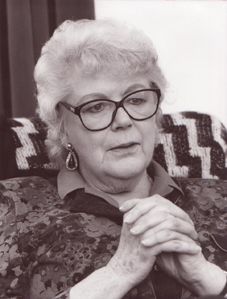
In Praise of Nancy McWilliams: On Psychodynamic Therapy

I forget when I first stumbled upon Nancy McWilliams, but it was some time ago. I had started with W.R.D. Fairbairn's pioneering work on the schizoid personality, and then read Melanie Klein and Harry Guntrip on the same phenomenon.

It was, however, only when I came to McWilliams that I found an essay on the topic that is the clearest and most compelling treatment of them all. Not unrelated to this post, McWilliams in that essay quotes Harold Davis to the effect that “'psychoanalysis is a profession by schizoids for schizoids'.”

On the strength of that essay, and also very much respecting Jonathan Shedler, who regularly extolls McWilliams work on Twitter, I put her Psychoanalytic Psychotherapy: A Practitioner's Guide on my reading list, and have now had a chance to go through it very carefully. It is excellent, especially for those with little background in psychoanalysis. 

I appreciate her openness in the preface where she recognizes that there is a legitimate diversity of treatments, but that psychodynamic approaches are often neglected when it comes to studies of their efficacy. From here she notes that her approach in writing this book will be to emphasize what may be applied "to all clients," and not just those who have signed up for psychodynamic therapy. I take her to mean that psychodynamic theory is applicable and useful in understanding patients even if a given therapist operates predominantly from a tradition of CBT or DBT (etc.). 

In this she puts me in mind of the great philosopher Alasdair MacIntyre whose early work in the philosophy of science and the development of theoretical traditions--and the clashes between them--rightly reminds us that one mark of a stronger tradition is its capacity to more fully and helpfully account in a better way for the gaps in, or problems raised by, its rivals. 

The other welcome note in the preface is that McWilliams is not going to be a zealous crusader insisting that everyone must slavishly imitate her methods, or those of psychoanalysis more generally. Instead she speaks of the "need for therapists to honour their own individuality in the arrangements they make" (xiii). The preface ends by McWilliams recognizing her own debts to various figures, including Theodor Reik (he of the "third ear") and especially Frieda Fromm-Reichmann, whom I wrote about appreciatively and at length here. 

Later on she returns to this theme, insisting in several places that one should "integrate one's individuality into the role of therapist" (p.52) and that therapists are most successful when they "relax and let their unique personalities become their therapeutic instrument" (53). As she notes later, "when it goes well, psychoanalytic therapy feels to both parties like a conversation from the heart, not the head" (66).

The patient seeing you being genuine and open, and speaking from the heart, can find all this therapeutic. But we must, of course, do more than that--if a bit of warm listening and sincere opening up were all that a patient needed, then they would simply turn to a good friend or family member, not a psychotherapist. The uniqueness of the role is that we must also challenge patients to grow. 

Throughout the book one has the sense of serenity in McWilliams: she is not someone who defensively feels she must be a fierce advocate for or against any particular approach, or to challenge patients in an obnoxious fashion. In this, as I have remarked elsewhere, she stands firmly in Freud's line who, pace the myths talked about him, emerges in his correspondence and in Paul Roazen's original and invaluable scholarship, as very "liberal" in encouraging all sorts of methods of healing, not just psychoanalysis. 

In her discussion on the "American Medicalization of Psychoanalysis," McWilliams, in fact, emerges as a critic of the tradition she is defending and its "cult-like atmosphere," its often ideological and hidebound ways that have, perhaps more than anything else, contributed to the vastly diminished standing psychoanalysis has in this country. 

By contrast, she notes that contemporary psychoanalysis in this country, to the extent it remains viable and healthy, tends, rightly, to eschew tendencies towards "purity" of both theory and method, being comfortably eclectic in some ways ("I remain skeptical of orthodoxies, especially technical ones" [p.23]). 

In her first chapter she draws close to something I am working on in my next book: the increased openness towards spirituality in psychoanalysis today, and psychology generally. Here she references the work of Bion in particular, whom I discussed a bit here. 

What, if anything, distinguishes a psychoanalytic approach from any other? McWilliams begins by noting that there must be a "curiosity and awe" for the unconscious, and an awareness that most of our behavior, thoughts, and feelings are not in fact consciously determined. This requires of the therapist a willingness regularly to have what one thought one knew about the patient disconfirmed and disturbed. If, she suggests, one is attempting to practice some version of Freud's "evenly hovering attention," then this might not be so difficult for in that state one has not fixated on any one thing, least of all some notion of causation which might blind us to other factors in play. 

In her second chapter, McWilliams quotes Christopher Bollas from his first (and to my mind still his best) book, The Shadow of the Object: Psychoanalysis of the Unthought Known: "in order to find the patient, we must look for him within ourselves." 

She rounds out this chapter with a brief discussion on the role of faith--in the process, in ourselves, and in our patients--though there is no mention here of the extensive writings on the topic by Nina Coltart, who, to my mind, has covered this topic perhaps more forcefully than anyone else I know of. 

Chapter 3, "The Therapist's Preparation," begins by noting that we are going to make mistakes, and need to be okay with that. What happens after the mistake is often more crucial than the mistake itself. Will this lead to an enactment, or rupture, and if so, how is that handled? 

In her fourth chapter, McWilliams discusses the well-known findings about the centrality of the therapeutic or working alliance to the success (or failure) of all therapies. The patient cannot be expected early on to know to check in about this, so the therapist needs to make a regular point of asking  "How are you feeling about working with me?" or "Are you finding yourself comfortable talking with me?" (p.82). 

I have, so far, only once been scared by a patient, but I managed to wrestle control over my fear by, as it were, "channeling" the spirit of D.W. Winnicott (whom I last wrote about here), about whom it was often said that he refused to be afraid of his patients. I thought fear would be something you'd just have to get used to, if it came to that, but McWilliams addresses fear and threats of various sorts in several places in the book, and she helpfully reminds us that "the therapist's sense of safety is as important as the patient's" (80). 

Later on in a related vein she will note that protecting therapist and patient alike is also part of the reason for the frame, and one should never deviate from it lightly. If, she says, you ever feel uneasy about any request that seems to veer towards a boundary violation, trust your gut and err on the side of being conservative. Boundaries and frames, moreover, are crucial in managing the huge power differential that exists in therapy, of which we must ever be mindful. 

If a sense of safety on the part of the patient exists, and boundaries are in good working order, then the patient may begin to experience his capacity to express hostility and contempt toward the therapist without fear of retaliation. Handling this requires a deft touch so that you do not masochistically collude in diminishing yourself on the one hand, nor in reacting defensively and perhaps vindictively on the other. 

The topic of hate returns late in the book, when she notes that a therapist might well need to encourage a patient not merely to express that feeling, but even feel encouraged to enjoy it. 

Handling other requests also requires a deft touch. A bit earlier, in her section "The Art of Saying No" (p.126), she has some very useful advice which I had no sooner read then within a day or two had occasion to put it into practice, finding success on both occasions (to my considerable relief!). She refers to those sometimes awkward conversations one must have with patients, often over fees, or no-show policies, or other limits. Rather than give them a lecture on how such limits or policies are really in the patient's best interest, she finds it much easier to elicit co-operation if she presents those as helping to fulfill her needs. 

I did this with a patient who had sustained a serious injury and then not showed up to two appointments in a row. I could legitimately tell this person that I was worried they might have been hospitalized with worsening injuries and I was worried about them. This prompted a phone call the following week when another (different but serious) reason kept my patient from making the appointment. I think both of us felt relief that this was handled now openly and simply via this expedient manner. 

Chapter six ends with some welcome reflections on the nature of psychoanalytic love. Here, as earlier, she has returned to Freud's famous observation in a letter to Jung that psychoanalytic cures are, in the end, ones of love. This, she insists rightly, is not an infantilizing form of love but one of serious respect that takes account of all qualities, positive and negative, in the patient. It is not cheap sentimentality, and certainly never exploitative. 

Chapter 10 offers some brief comments on sexuality, noting "how sexually diverse people are," and learning this can often be a very freeing part of good psychoanalytic therapy: "the appreciation of sexual diversity and the capacity to own one's unique sexuality without apology are frequent 'nonspecific' outcomes" (pp.254-55). 

The final chapters of the book offer an array of more practical tips to therapeutic practice, with welcome comments on malpractice hearings and ethical violations, and how to handle them. The very last chapter is focused entirely on self-care, one form of which she advocates that I also greatly love doing: writing. Here she quotes Michael Eigen that "psychoanalysis is a writing cure, not only a talking cure. Writing helps organize experience of sessions, but it also helps discover and create this experience." 

In the end, McWilliams has a lovely answer as to why many of us might be, at least in part, motivated to do this work: "our patients heal us as we heal them" (p.281).